

The miracle of the Internet: I read a version of this or even this comic book more than 30 years ago at the French Institute in Bucharest. And now I actually got it in my library. I love the world, sometime.
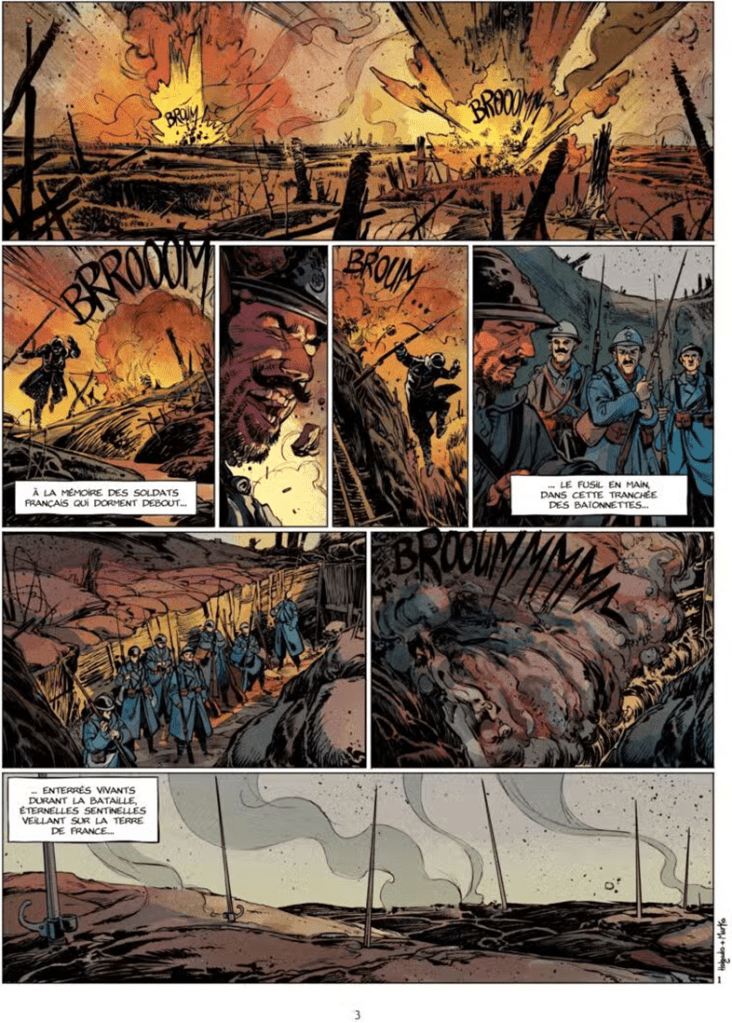
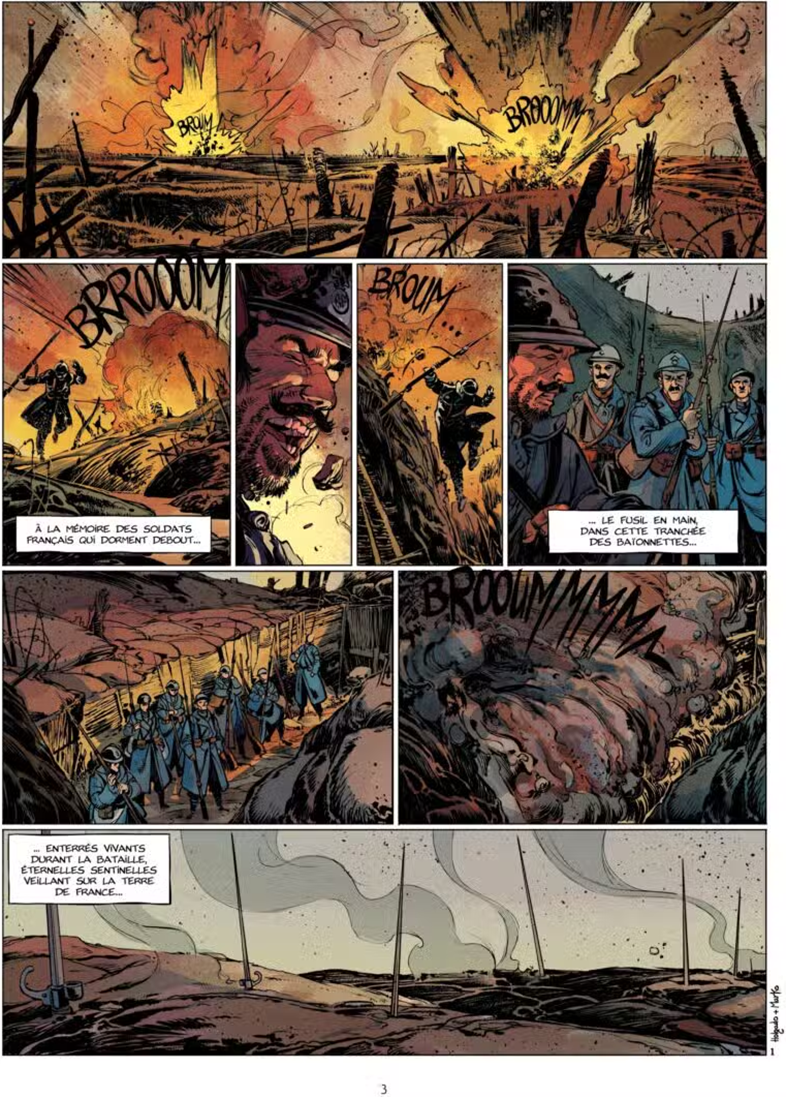
This episode depicts the battle of the Hill of the Dead Man (Côte 304 Mort d’Homme) 10 km from Verdun during the cataclysmic February-December 1916 battle that saw ferociously well-prepared German attacks extinguish themselves against the wall of chests of the French poilus.
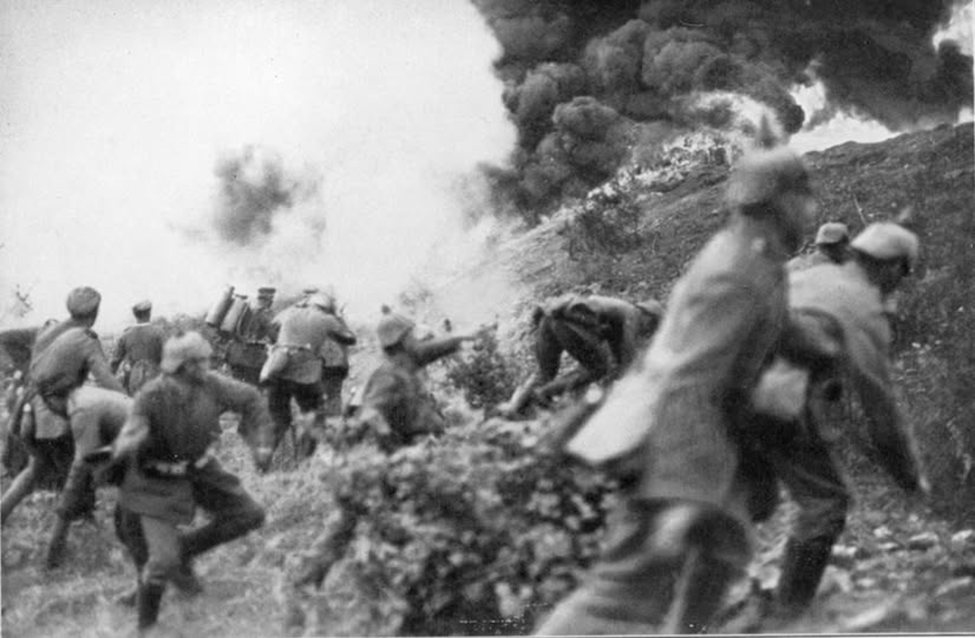
Heavy and superheavy artillery, machine guns galore, flame-throwers (a novel weapon at the time), gas attacks, aviation strafing, aviation bombardment, minenwerfers or trench mortars, the German Kronprinz used it all, attempting to dislodge and bleed the French Army dry.
In the end, after 700,000 casualties in 11 months, Verdun remained French. Where there’s a will, there’s a way. It is true what they say: it’s not the dog in the fight that matters; it’s the fight in the dog, ladies and gents. Always.
My advice to you’ll: fight every day of your lives. Fight your enemies everywhere, never surrender. And if you must die, as we all must, you best die with your hands firmly affixed on your enemy’s throat, constricting their airflow.

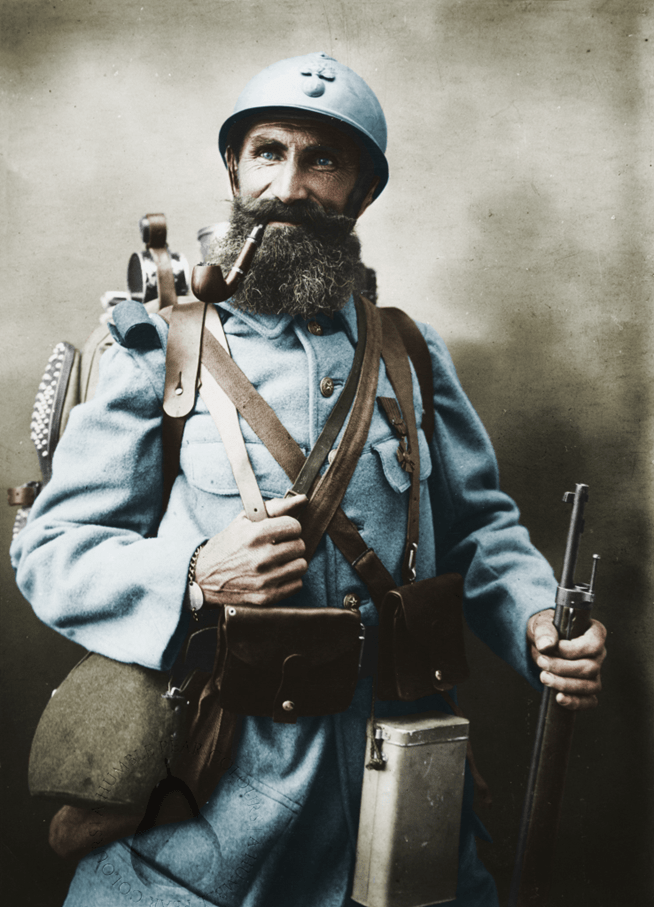
You want to know who saved France from the Boche? It is the Poilu. It is this man here, this barbu, in blue-ciel uniform, with blue eyes, smoking his pipe, indefatigable, and holding his military accoutrements, his boots, his trusted Lebel rifle, and wearing his Adrian helmet.
Nobody else, not his superiors whoring happily away behind the lines in Paris’ cabarets and whorehouses.
Not the bloody war profiteers who sold ammunition to Germany during the War via Switzerland, and made millions of money selling out their country.
Not the motherfucking politicians who betrayed France before, during, and after the War.
It is the sacrifice of millions like him that allowed the children of France to have a chance for a better tomorrow. He’s been dead for more than a century now. And like him, many, oh so many, others. The fields of France and Belgium continue to yield crop after crop of wheat that is transformed into the best croissants and pastries in the world. And that is also due to them. The poilus are the gift that keeps on giving long after they exited life only to enter legend.
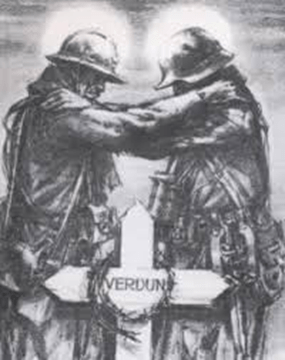
We would do well to remember their deaths and keep away from wars that only benefit a few but destroy the many. The rows of crosses adorning the Earth are a reminder of the folly of man. We should pay heed to their message: Lest we forget!
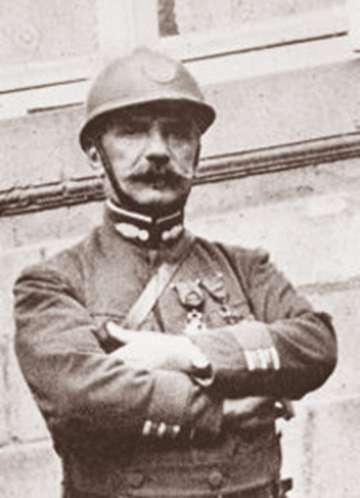
And since we are discussing Heroes, here is another one.
Colonel Driant was a brave man who knew his command was doomed the moment the Germans attacked the disarmed Fort of Douaumont on 21st of February 1916. Still the man fought his two battalions of Chasseurs Alpins with the verve and courage that made him a legend in the French army.
The man was a natural-born fighter, and when he saw two divisions of Germans assaulting his position, he took a rifle and joined the fray. He died shot by a machine gun in the temple. Afterwards, the German Army retrieved his body and returned it to his widow via Switzerland.
This smart soldier who had anticipated the War in all its technological bestiality, and who had tried to prepare France for it, was also a very good diplomat. In late 1915, one of his higher connections, King Alphonse XIII of Spain, informed him of the impending German attack in the Verdun sector. Colonel Driant took this piece of intelligence to his superiors at the War Department and to the Commander in chief of the Army, Generals Gallieni and Joffre respectively, but nothing happened. Oh, I lie. Something did happen: the morons in charge of France’s defenses decided to disarm the Fortification of Douaumont, removing the heavy fixed artillery from the fort, and leaving it defenseless against the Kronprinz’s assault troops.
There is a lesson to be learned here: it is not worth sacrificing your life for a country that betrays you through the evil stupidity, ignorance, and avidity of her leaders. Btw, Colonel Driant was the son in law of General Boulanger, who was nothing like him, the former being a hero of France, while the latter was a mere abject coward, who shot himself dead on the tomb of his lover. Pitiful!
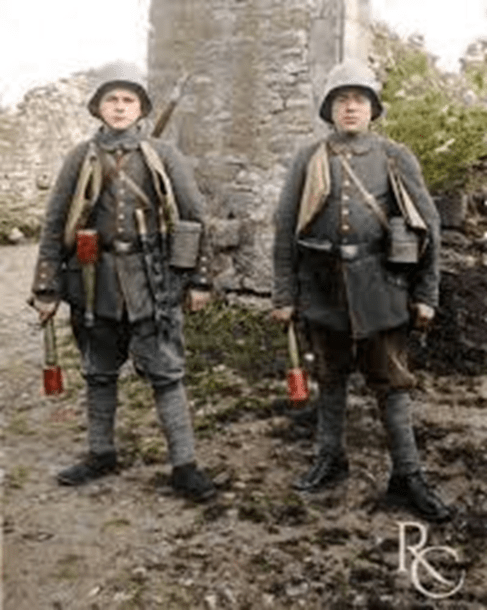
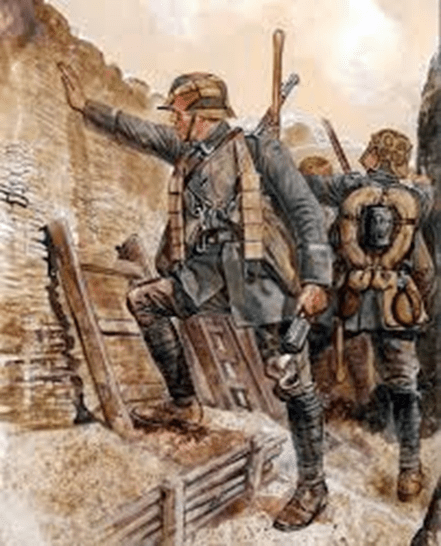
The German Stormtroopers
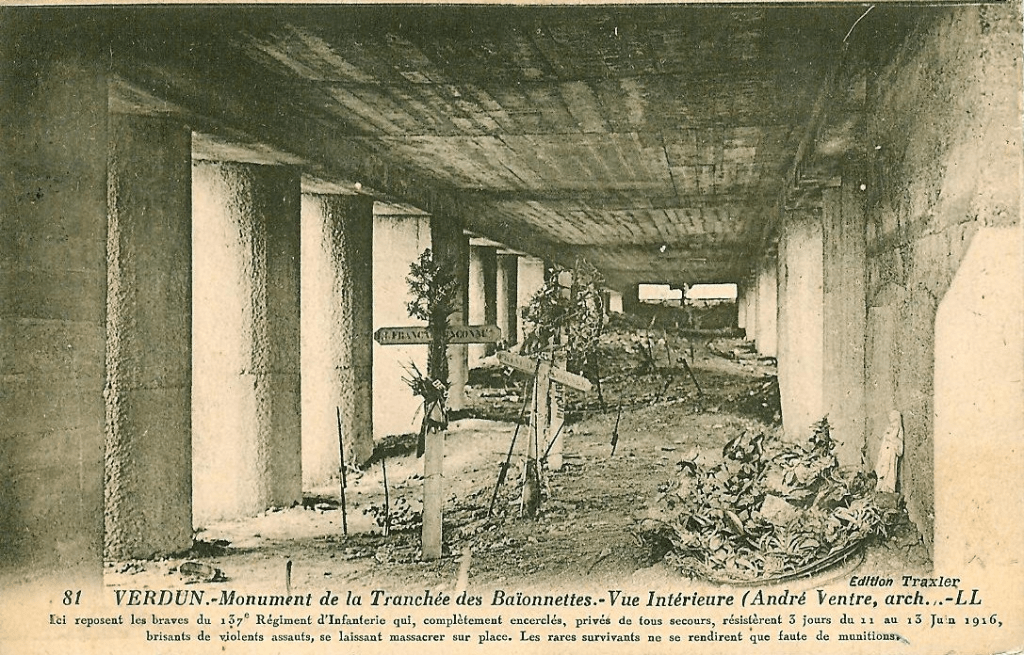
The Trench of the Bayonets was one of the most horrendous tragedies of WW1 whereby a battalion of the French Army holding the line against German attacks, was buried alive when the enemy heavy artillery destroyed the hill above their trench.
Next day, their sepulcher was given away by their bayonets protruding from the ground they laid their lives to protect.
Not sure if many people understand the value of sacrifice in this wicked little world of ours.
But I do.
There are some things worth dying for in this life.
Ask yourself this, folks: what or who would you die for?
These honest Poilus died for their beloved idea of France.
Where is your Côte 304 Mort d’Homme?
POST SCRIPTUM
Funny thing: Wikipedia/online sources dixirunt the Trench of the Bayonets is just a myth. They claim that most likely some soldiers got buried either alive by artillery or post-mortem as per the norm, and that rifles and/or bayonets were placed in the ground to mark their sepulchers in lieu of crosses, after the fact.
I don’t dispute this was the case in most of instances in that war and in all wars before and since. What I say is this:
1. Artillery, especially WW1 one, and German shell fire particularly was unprecedented, since it even exceeded WW2 standards given the fixed nature of WW1 fighting. Germany expended tens of millions of rounds during the battle of Verdun. The Entente spent the same amount of ammo during the 1916 Somme, 1915 Champagne, and 1917, 1918 offensives/pushes. All of this was focused on sectors. That is to say not all the frontline received the same attention from battery fire. The area adjacent to the Swiss border at Basel where the FR and GER lines met, received a negligible number of shells, whereas some areas were so much destroyed by artillery, they became impracticable for any kind of traffic. Some of the no man’s land there became a death trap then and continues to be a danger due to unexploded ordnance more than 100 years later.
2. Given the particular concentration of fire the German Imperial Army unleashed on Hill 304 and south-west of the Douaumont Fortification, that was obliterated by the end of the battle in December, it is very very likely that the remnants of the 137th Regiment of Infantry were buried alive on June 13, 1916. If they were about to go over the top, their bayonets would have been fixed, since ammo was running short by then.
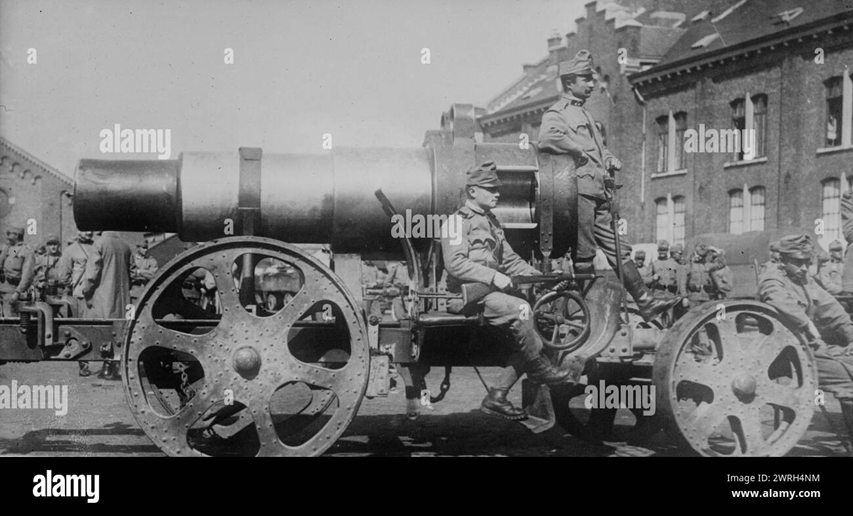
A bracket of heavy or very heavy shells (the Germans brought 21 pieces of 305 mm Austrian siege artillery and their own 420 mm howitzers to reduce the fortifications of Maubeuge, Liege and Namur, in 1914), would have been more than sufficient to bury alive the brave soldiers defending their beloved France.
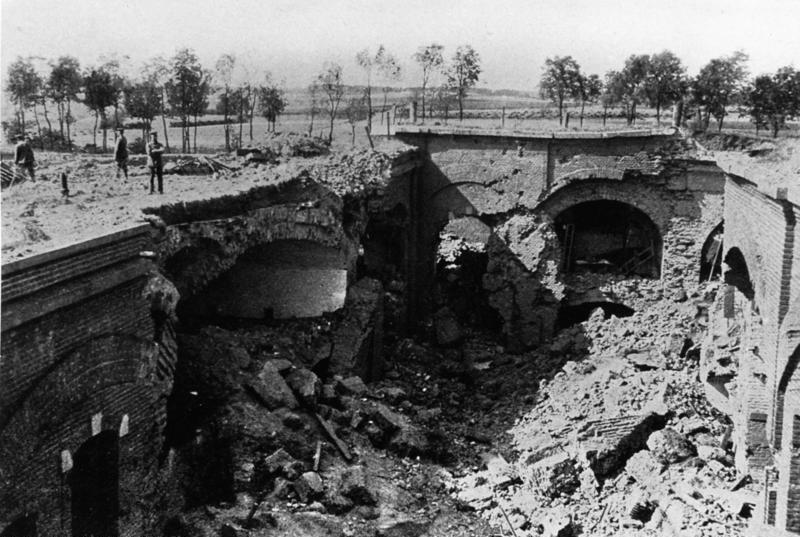
For these reasons, the Trench of Bayonets is no Myth. It is a reminder of what man is to man: Homo Homini Lupus Est.