

I wanted to write this post decrying Gandhi’s moral hypocrisy and grandstanding pacifism, neither of which, if we are honest, India used to become the great power it’s getting to be.
Gandhi once said, “An eye for an eye makes the whole world blind in one eye.” This is patently false equivalency. It’s a straw man argument, at best. At worst, it’s a load of bovis stercus.
No, ladies and gents. An eye for an eye doesn’t make the world blind. It makes nations more careful about their next move. As it should. But then again, perhaps Gandhi was on to something. Perhaps the world deserves to be blind.
Let justice be done though the heavens fall.
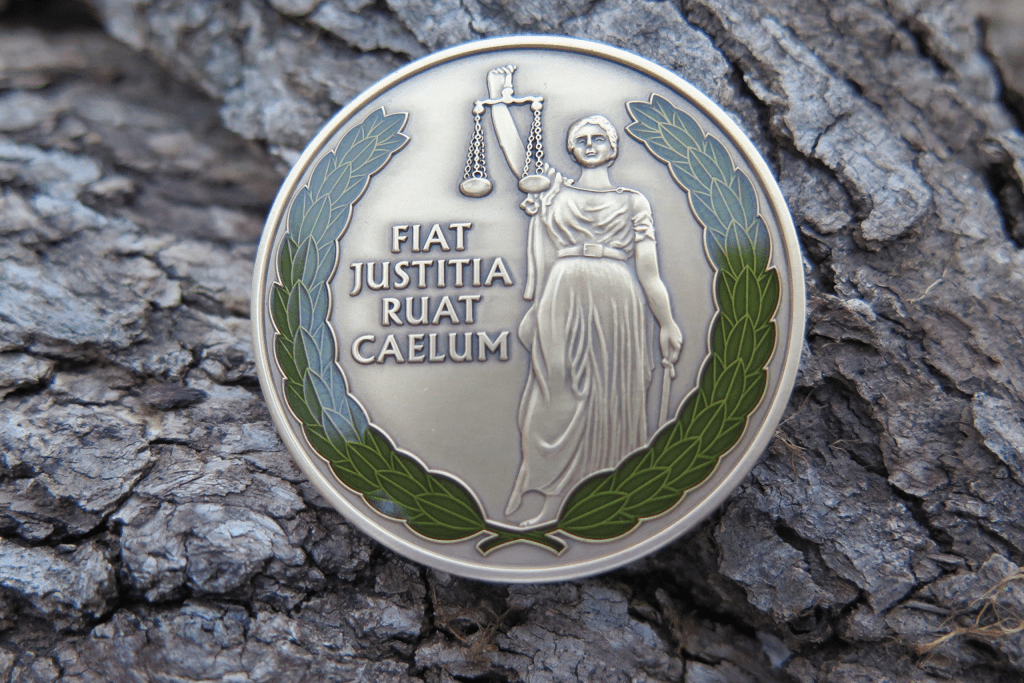
I am a true believer in Lex talionnis. I love it. I love it because I love Justice. And true Justice, the only kind there is, is the one you exact yourself on the very spot of and as soon as possible after the crime was committed. Anything else is a sham, a travesty, mock theatre.
In politics as in life, one must always endeavor to say what they’ll do and do what they say. Otherwise, it all becomes chaos.
Many people are not going to like what I am about to say. A friend of mine recently asked me point blank if I loved Putin. I said no, I do not love the man. I do like him though. I like his style a lot. It’s like this, actually. And this impression of mine was confirmed by a close acquaintance from work, who told me:
Mister, if Putin promises to kill you, you are a dead man. You might not know it. You might disregard it as fabrication, rumor, you name it. But if Putin said he was going to get you, you are as good as got.
Anonymous, 2023.
I always had the same feeling. Ever since the man promised, famously promised to track down Chechen terrorists wherever they may go, even on the seat of ease, I knew this man was dead serious.
Putin is not a murderer. Not in the sense that the media portray him to be. Sure, he’s got a heavy conscience. But that’s because he took Russia from a deep hole and made it whole again. In the process, blood was surely spilled. A lot of blood was spilled. But the man is nothing but honest.
If you are his declared enemy, he will fight you, fair and square. He won’t try to assassinate you if you had no such designs against him, in the first place. But if you become his confidante, his aide, his counsel, his advisor, his trusted man, and you betray him, you are a dead man walking. Sooner or later, your lips will touch a radioactive agent, or perhaps the assassin’s blade will find its way into your rib cage, or the marksman’s bullet will shatter your body. That is if no missile homes in on your cellphone signal, while you are trying to relieve yourself.
Last year, in 2022, Naftali Bennet, Israel’s Prime Minister at the time, asked Putin to promise not to liquidate Volodymyr Zelenskyy. And Putin solemnly assured him he won’t. That is a guarantee that Zelenskyy will live out the rest of his natural life. The President of Ukraine can take that to the bank when Western aid cash flows stop getting in. It may be the only thing he will be able to bring to the bank, by then.

But why am I saying all this stuff? Why am I blabbering like an old gander? I shall tell you why.
Because my love for Justice, and my unshakeable belief in Lex talionnis, made me into a fan of the State of Israel. I must admit I was not like this from the beginning. In fact, in my formative years, I shared a few prejudices against the Chosen People. Chiefly among it, mea culpa, was the belief that Jews control media and finances, and that’s why we couldn’t speak ill of them.
Incidentally, it is true that a large part of the media is controlled by Jewish interests, private Jewish interests. So what? Is that illegal? No. Is that immoral? Perhaps. Chances are most people would also try to control media and finances if they could. Tell you what, I believe there is nothing wrong with Jews owning the media and finances, or with your complaining about it. Their ability to do so should not prevent your right to exercise your freedom of speech.
And it is also true that Jews are very well entrenched in the global financial sector. And normally, this does not raise any concerns in and of itself. However, like in all things in life, there are a bunch of notable exceptions like Bernie Madoff or crypto would-be God Sam Bankman-Fried who give Jews a very bad name. However, the same people also stole from and defrauded their own kind. So, that’s that. I guess both statements that Jews control the media and finances, and Jews also steal other Jews blind, can be true at the same time.
The former statement just is, the latter fact is despicable, but in the end that is human nature.
The reason for my lack of deference for the Chosen People is about to become apparent. While the going was good for Jews, it was only normal to treat them with the same nonchalant lack of deference I reserve for all people in general and in detail.

But since the 7 October 2023′ Hamas terrorist attacks, I remembered what I once told my beautiful esposa. I said and this was 10-15 years ago when one couldn’t speak ill of Jews for fear of being prosecuted, not cancelled, but prosecuted, I said:
“Honey, most people are cowards who kiss the ring of the powers that be while they are strong. Not I. I care not for such travesty. I will speak my mind regardless, for as long as facts are on my side. Most people pretend to be pro-Jewish but where were they between 1933 and 1945? They must have been hiding. For almost nobody came out publicly to protect the Jews from Nazi persecution. If I had been born in those times, I would have stood and fought for them. Because as victims, defenseless victims of a murderous regime, they had no one to speak, act or fight for them. They themselves were slaughtered with impunity, and the world did not even avert its eyes. They knew that was wrong and still they did not say a thing. That is the true measure of the world we live in. That was true then. That is still true today. And that will always be so. Because humans are beasts, cowardly beasts.”
Me, cca. 2010.
So yeah, folks, I am a fan of Israel because I believe Jews deserve to have their ancestral home. And I also believe that Justice was served when they escaped from Europe and built their land from the ground up. It is true what they say. Israel is a Startup nation.
I guess that makes me a Zionist.
I admire any people who decide to stand up for themselves. I truly think that is what separates survivors from slaves. And let’s face it, folks. Most people are slaves. Content to let the powers that be rule over them, lord over them, tax them into the poor house, cull them at intervals even. Jews are anything but that.
In fact, I will tell you a story. I shall tell you the story of Eliahu Itzkovitz, the man who took Justice in his own hands… just like we all ought to.
Eliahu had grown up in a small town in eastern Rumania when the country threw in its lot with the Nazis at the beginning of World War II. Soon, the Rumanian Conducatorul (the “Leader”) Antonescu began to emulate all the tactics of the Nazis, his own version of the Brownshirts calling itself the “Iron Guard” and practicing mass murder on a large scale. In fact, according to the British writer Edward Crankshaw in his book Gestapo, they “offended the Germans on the spot by not troubling to bury their victims; and they offended the R.S.H.A.* by their failure to keep proper records and by their uncontrolled looting.”
NOTE: Between 1941 and 1944, Ion Antonescu was the Conducatorul or Leader of Romania. In his cabinet there was a miscreant, a lawyer by the name of Mihai Antonescu, who was the Minister of Foreign Affairs. In July 1941, this genocidal maniac preached, nay ordered the deportation of Moldova and Bukovina Jews. This bloody bastard called for ethnic cleansing, by any measures including machine-gunning Jews. He said “I do not care if we will enter history as barbarians… This decision is officially mine and I say there is no law (…) So, there are no formal orders, you have complete liberty of action.” Source: Jean Ancel, Archival sources about the “Romanian Holocaust” – Transcript of the Government session of 8 July 1941.
My point is this. While the final responsibility rests with Ion Antonescu, as the Head of Government, who approved Mihai Antonescu’s genocidal agenda, there were Romanians who managed to bring shame to the nation. Makes me sick, really. Not sure which of the two unrelated Antonescus Crankshaw talked about in his book. Perhaps he was alluding to both.
The Itzkovitz family did not escape the collective fate of the Rumanian Jews. Eliahu and his parents and three brothers were sent to a concentration camp, no better and no worse than most Eastern European camps; one lived a few days to a few weeks and died from a wide variety of causes, mostly beating, and shooting. Rumanian camps were not as well equipped as their German models, the “death factories” of Auschwitz and Treblinka with their sophisticated gas chambers. Again, according to Crankshaw, “the Rumanians showed a great aptitude for mass murder and conducted their own massacres in Odessa and elsewhere,” and the Itzkovitz family paid its price—within a short time, only Eliahu, the youngest boy, survived.
But he had seen his family die, and he had remembered who killed it. It had been one particular brute, not the coldly efficient SS-type but a Rumanian from a town not too far away from his own hometown and who enjoyed his new job. And Eliahu swore that he would kill the man, if it took all his life to do it. More than anything else, it was probably that hatred which kept him alive; he was a skeleton but a living one when the Russians liberated him in 1944. Eliahu then began his patient search from town to town. Of course, Stanescu (or whatever name the brute had assumed in the meantime) had not returned to his hometown for good reasons, but Eliahu found his son there and took his first revenge; he stabbed the son with a butcher knife and in 1947, a Rumanian People’s Court sentenced him to five years in a reformatory for juveniles.
Eliahu served his time but did not forget. His family’s murderer was still at large, and he had sworn to kill him. In 1952, he was finally released and given permission by the Communist authorities to emigrate to Israel, where he was drafted into the Israeli army in 1953 and assigned to the paratroops. Training was rigorous in the sun-drenched barracks and stubby fields south of Rehovoth, and thoughts of revenge had become all but a dim memory. There was a new life to be lived here, among the people from all corners of the world who still streamed in and who, from Germans, Poles, Indians, Yemenites, or Rumanians, became Israelis. To be sure, Eliahu still met some of his Rumanian friends and talk often rotated back to the “old country,” to the war and the horrors of the persecution. Camps and torturers were listed matter-of-factly, like particularly tough schools or demanding teachers, and Stanescu came up quite naturally.
“That s.o.b. made it. He got out in time before the Russians could get him,” said a recent arrival, “then he fled to West Germany and tried to register as a D.P., but they got wise to him and before we could report him, he was gone again.”
Eliahu’s heartbeat had stopped for an instant, and when it resumed its normal rhythm, he had shaken off the torpor of peacetime army life. The hunt was on again.
“Do you know where Stanescu went then? Do you have any idea at all?”
“Well—somebody said that he had gone to Offenburg in the French Zone, where they recruit people for the French Foreign Legion, and that he enlisted for service in Indochina. The French are fighting there, you know.”
On the next day, Eliahu’s mind was made up. He reported to his commanding officer and applied for transfer to the Israeli Navy; he liked the sea, had learned something about it while in Rumania, which borders on the Black Sea, and would be happier aboard ship than as a paratrooper. A few days later, the request was granted, and Eliahu was on his way to the small force of Israeli corvettes and destroyers based in Haifa. A few months later, the opportunity he had been waiting for came true; his ship was assigned to go to Italy to pick up equipment.
In Genoa, Seaman Itzkovitz applied for shore leave and simply walked off the ship; took a train to Bordighera and crossed over to Menton, France, without the slightest difficulty. Three days later, Eliahu had signed his enlistment papers in Marseilles and was en route to Sidi-bel-Abbès, Algeria, the headquarters and boot camp of the Foreign Legion, and again three months later, he was aboard the s/s Pasteur on his way to Indochina.
Once in the Foreign Legion, Stanescu’s trail was not too hard to pick up. While no unit was made up of any single nationality, each unit would have its little groups and informal clans according to language or nation of origin. It took patience, but early in 1954, he had located his quarry in the 3d Foreign Legion Infantry. The last step was the easiest; the Foreign Legion generally did not object if a man requested a transfer in order to be with his friends, and Eliahu’s request to be transferred to Stanescu’s battalion came through in a perfectly routine fashion. When Eliahu saw Stanescu again after ten years, he felt no particular wave of hatred, as he had somehow expected. After having spent ten years imagining the moment of meeting the killer of his family eye to eye, the materialization of that moment could only be an anticlimax. Stanescu had barely changed; he had perhaps thinned down a bit in the Legion; as for Eliahu, he had been a frightened boy of thirteen and was now a strapping young man, bronzed from his two years of training with the Israeli paratroopers, the Navy, and the French Foreign Legion.
There was nothing left to do for Eliahu but to arrange a suitable occasion for the “execution;” for in his eyes the murder of Stanescu would be an execution. Stanescu (his name was, of course, no longer that) had become a corporal, and led his squad competently. The new arrival also turned out to be a competent soldier, a bit taciturn perhaps, but good. In fact, he was perhaps better trained than the run of the mill that came out of “Bel-Abbès” these days. He was a good man to have along on a patrol.
And it was on a patrol that Stanescu met his fate, in one of the last desperate battles along Road 18, between Bac-Ninh and Seven Pagodas. He and Eliahu had gone on a reconnaissance into the bushes on the side of the road when the Viet-Minh opened fire from one hundred yards away. Both men slumped down into the mud. There was no cause for fear: the rest of the squad was close by on the road and would cover their retreat. Eliahu was a few paces to the side and behind Stanescu.
“Stanescu!” he called out.
Stanescu turned around and stared at Eliahu, and Eliahu continued in Rumanian:
“You are Stanescu, aren’t you?”
The man, the chest of his uniform black from the mud in which he had been lying, looked at Eliahu more in surprise than in fear. For all he knew, Eliahu might have been a friend of his son, a kid from the neighborhood back home in Chisinau.
“Yes, but . . .”
“Stanescu,” said Eliahu in a perfectly even voice, ‘I’m one of the Jews from Chisinau,” and emptied the clip of his MAT-49 tommy gun into the man’s chest. He dragged the body back to the road: a Legionnaire never left a comrade behind.
“Tough luck,” said one of the men of the platoon sympathetically. “He was a Rumanian just like you, wasn’t he?”
“Yes,” said Eliahu, “just like me.”
After completing his enlistment in the French Foreign Legion, he proceeded to the Israeli Embassy in Paris where he presented himself to the military attaché to answer for his previous desertion. After verifying his claims, he voluntarily travelled back to Israel for trial. At his court-martial he was found guilty but was sentenced to one year imprisonment in light of the unusual circumstances surrounding Itzkovitz’s imprisonment.
Bernard Fall, Street without Joy (1961)

I was born in Romania, and although I don’t have a valid Romanian passport anymore, I consider myself Romanian. I won’t apologize for the crimes perpetrated by some from my grandfather’s generation against Jews or any other people. Why should I? I did not commit them. Furthermore, had I lived in those troubled times, I would have fought with all my might against this infamous injustice.
But this is why people should not be proud to belong to any ethnic group. Because if you do consider yourself a proud American, you automatically say that you take pride in all the good and the bad stuff your people have done historically.
But the image above will remain imprinted in my brain for as long as I live, knowing that no people, not even my own, is free of monsters. And make no mistake, unless people who commit such acts of atrocity against humanity get their swift comeuppance, they will reoffend. The only way to prevent it is to stop delegating your responsibilities to others.
Justice has always been, still is, and will always be a personal matter.
If Eliahu hadn’t taken matters into his own capable hands and pursued his family’s murderer to the end of the world, who else would have had the means, inclinations, diligence, and dedication to do it in his stead?! Nobody.
The same thing goes for Israel’s declaring war on Hamas and its invasion of Gaza. Hamas started the war; Israel will finish it. The Israeli are not a people one trifles with. And that is why I stand with Israel because they believe in swift, just, and immediate retribution on a biblical scale.
Moshe Dayan, the Israeli military genius, once said that for his country to survive, it must adopt the mindset of a mad dog. This meant that any attack on Eretz Israel ought to be met with such a disproportionate show of force that no power would ever countenance even looking at a Jewish citizen on vacation overseas, the wrong way.
Sounds disturbing, right, right?! That’s because it is. A mad dog is disturbing. But what would you rather have guard your home if you lived in a bad neighborhood? A portable Shih Tzu miniature doggie or a Mad Dog?
I know which one I’d want for a bodyguard. And so do you.
 Götterdämmerung