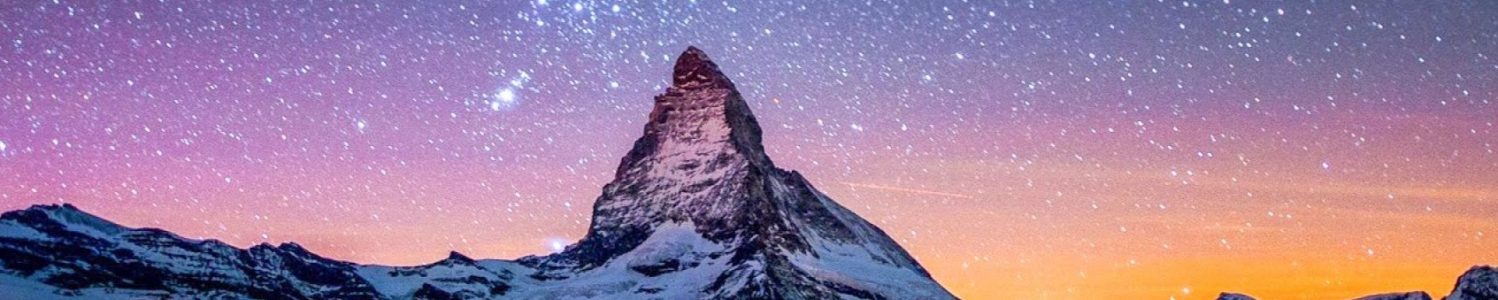

Napoleon was a gifted soldier: perhaps one of History’s greatest. That much is apparent to almost everyone.
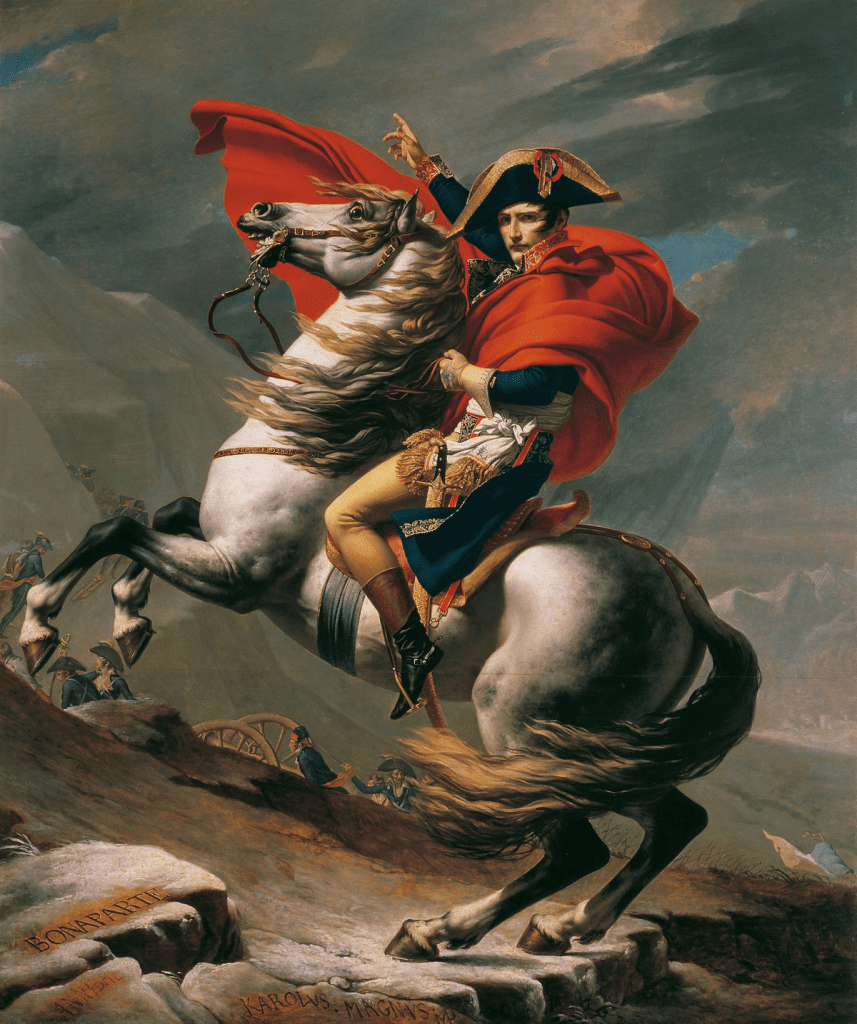
What most people do not know is that he was also a keen observer of human affairs and a reputable geo-strategist.
Yes, oh yes, he also made two errors: the Peninsular Campaign in Spain and invading Russia. Those were monumental blunders, both compounding interest on the other.
And as we all know, or at least ought to be aware, he lost the Wars, the Empire, and his Throne.
But still, the man was an astounding creator of political aphorisms, most of which endure to our day and age.
One day he described England as an empire “built around an island-nation surrounded by seas, that had chosen to act after the Napoleonic Wars ended, in “splendid isolation”.
This state of things described a nation, an empire that chose to take care of her Commonwealth and leave Europe to its petty squabbles. But that only after defeating Napoleon himself. Which is to say that England dreaded no other force in the world but Napoleonic France. Which also said a lot about the caliber of an enemy so singular that it forced Whitehall to focus all its efforts and energies on a generation-long struggle to annihilate it.
Now I have always loved a political simile. Here is the Swiss Confederation, an island of peace surrounded by dangerous waters on all quarters. So apt an image has never been imagined.
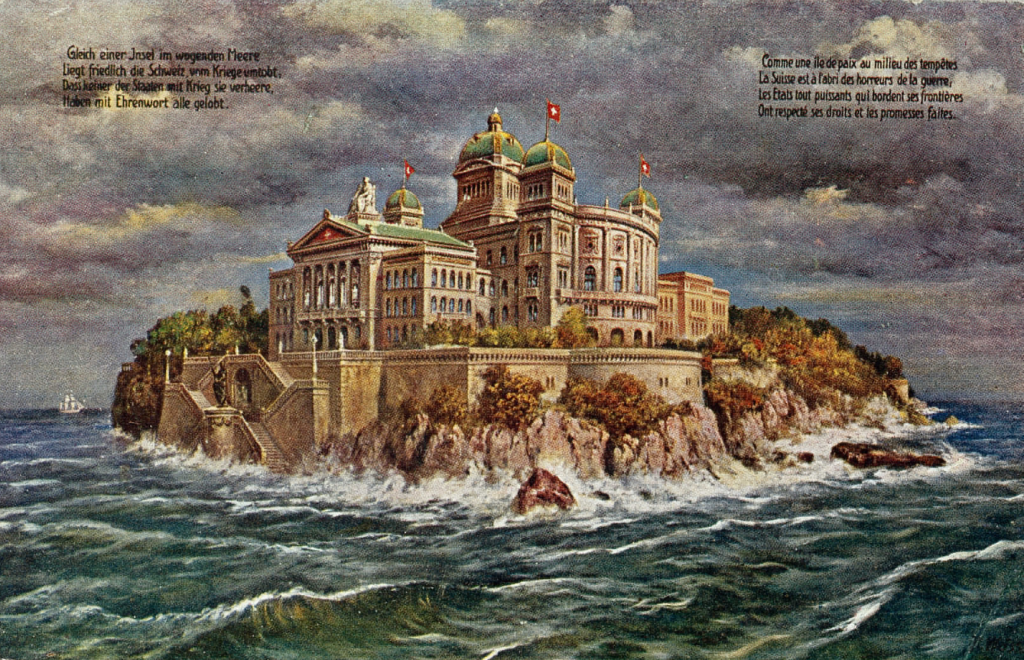
But truth be told, isolation is a boon.
Case in point:
In the 16th century, Japan was discovered by the Portuguese explorers reaching Asia.
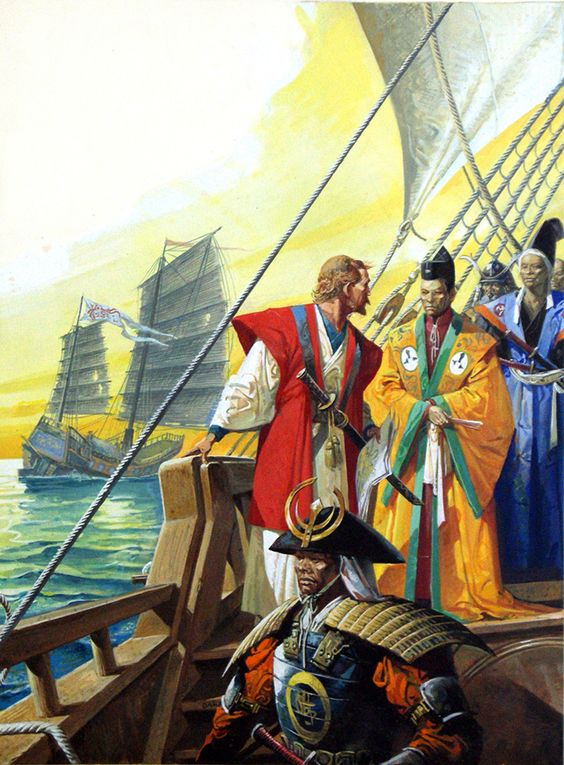
Alongside the Lusitanians, firearms reached the Land of the Rising Sun, too.
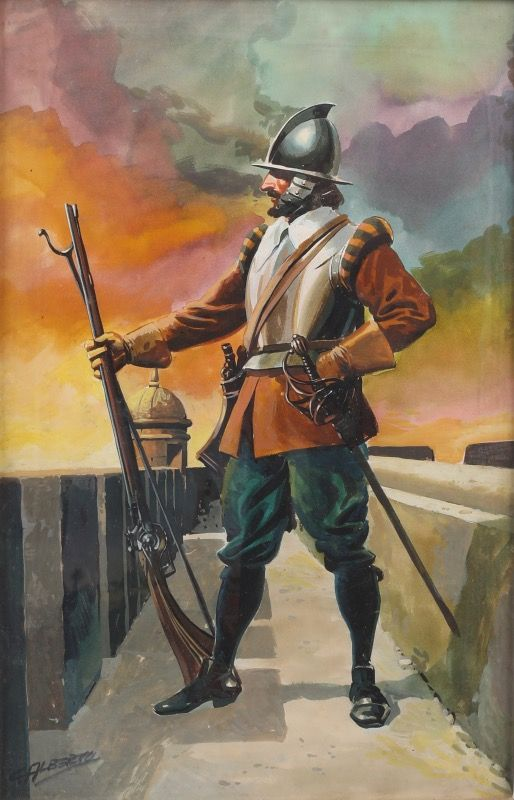
But unlike most other ‘discovered’ peoples, the Japanese did not choose to shun European know-how. Instead, they adopted it and built on it. In fact, they did it so fast and so well, that within a generation or two, their firearms had reached technological parity in effectiveness and ease-of-use with those of their would-be colonizers.
The Portuguese also introduced the Christian Cross in the land of the Shogun. And while Shintoism was an established religion already, the Tokugawa shogun did not mind it in the least and so he allowed Christians missionaries to roam free across the land.
But in any event, Japan did not sit idle like a ripe plum ready for the taking by the intrepid Portuguese. In fact, its people people paid extreme attention to the Westerners’ ways, copying the most important stuff while disregarding the rest.
And that is why two things happened:
- By 1600, Japan was already making arquebuses more advanced than the European stock.

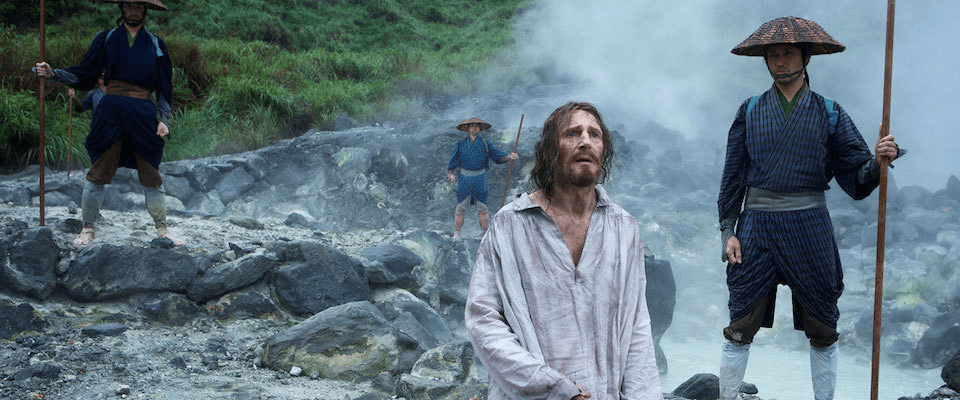
*Apropos this era, Scorsese’s Liam Neeson managed to move us more than his historical character ever did the Japanese 400 years ago.
2. That the Shogun Tokugawa Ieyasu would send the Keicho Embassy to Rome (1613-1620) exactly 100 years after the destruction of the pre-Columbian peoples in Central America, was another fortuitous moment for the Land of the Rising Sun.
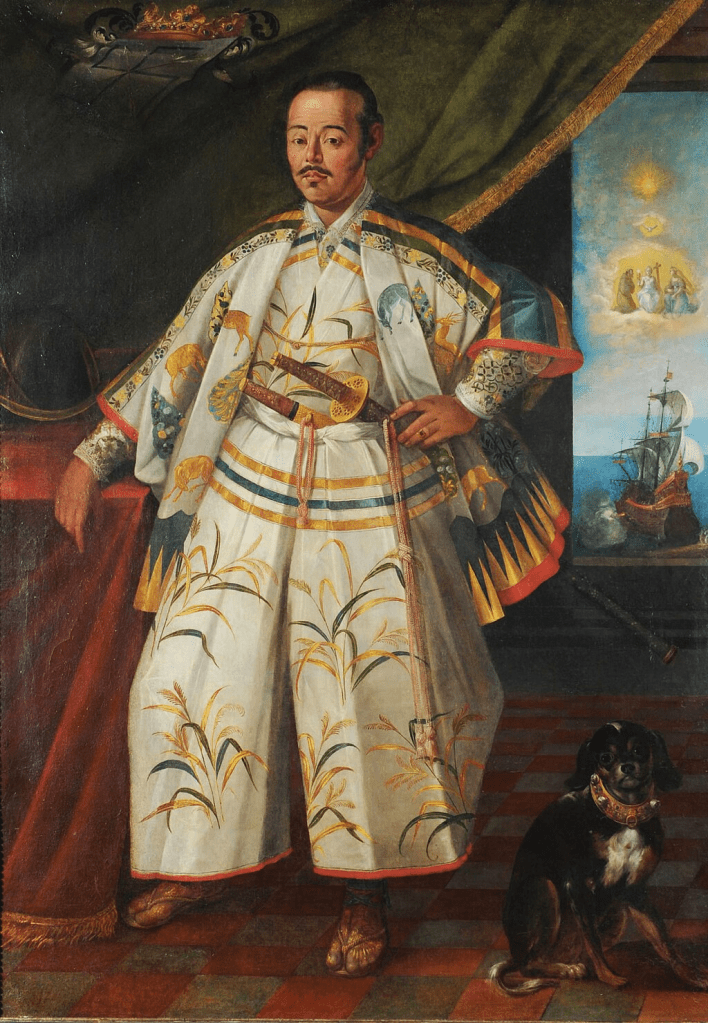
His chief diplomat, a noble aspiring to clear the name of his family, after his own father had been condemned to death for corruption, Hasekura Rokuemon Tsunenaga was the man for this Herculean task.
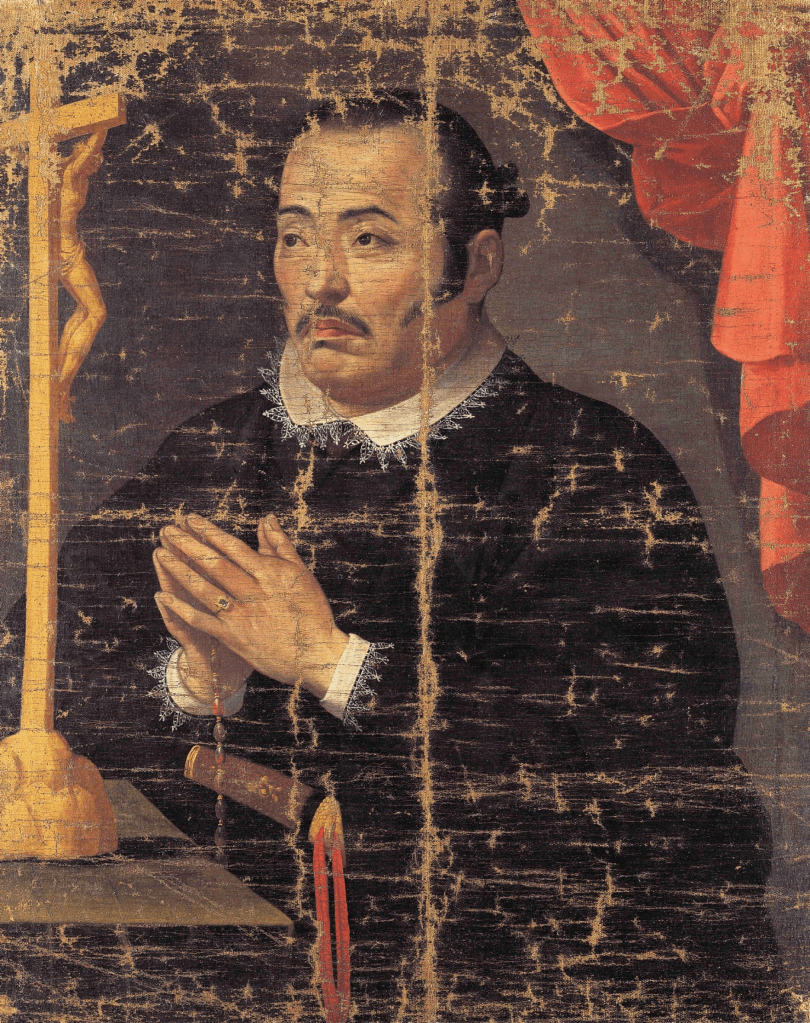
After embarking on a voyage around half the known world that would land him on the Spanish Main (i.e., Mexico), where he witnessed firsthand the brutal results of the European Colonization upon the Mesoamerican native peoples, Tsunenaga reached Rome, where his embassy failed.
The man returned to Japan, where his report informed the decision of his master, the Shogun.
After hearing the tale of the plunder, genocide, and extinction of the Maya, Azteca, and Inca at the hands of the Conquistadors, the Shogun justly decided to cut off all ties with the West, thereby making sure that Japan remained an unknown land, and thus a dangerous enigma for many foreigners for the intervening 232 years.
It is undoubtedly clear in my mind, that his wise and far-reaching decision to expel all missionaries and confine foreign trade to an artificial island outside Nagasaki harbor, saved Japan from destruction, acculturation, and/or becoming a colony/emporium of the Portuguese, Dutch, and Spanish.
Eventually, the West would catch up with the Nippon when Commodore Perry sailed past Edo, only dropping anchor in the port of Kurihama, in 1853. The man was relentless.
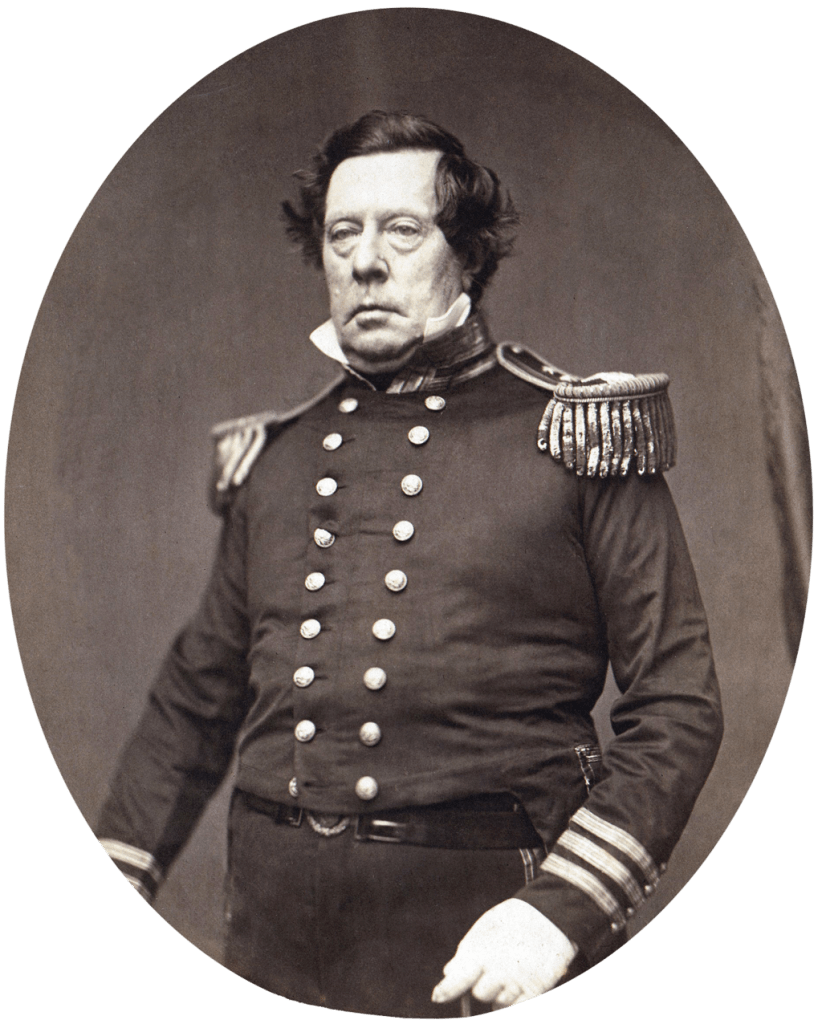
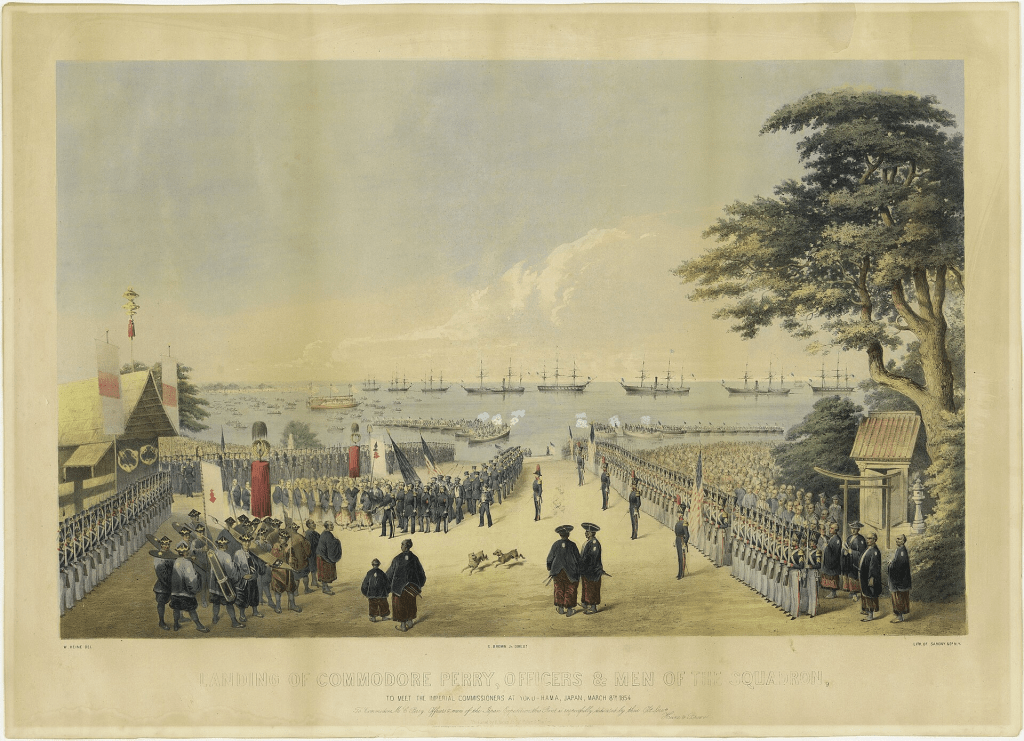
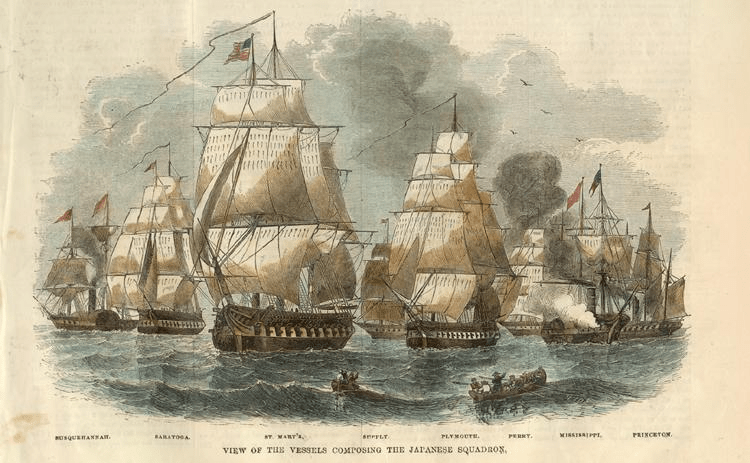
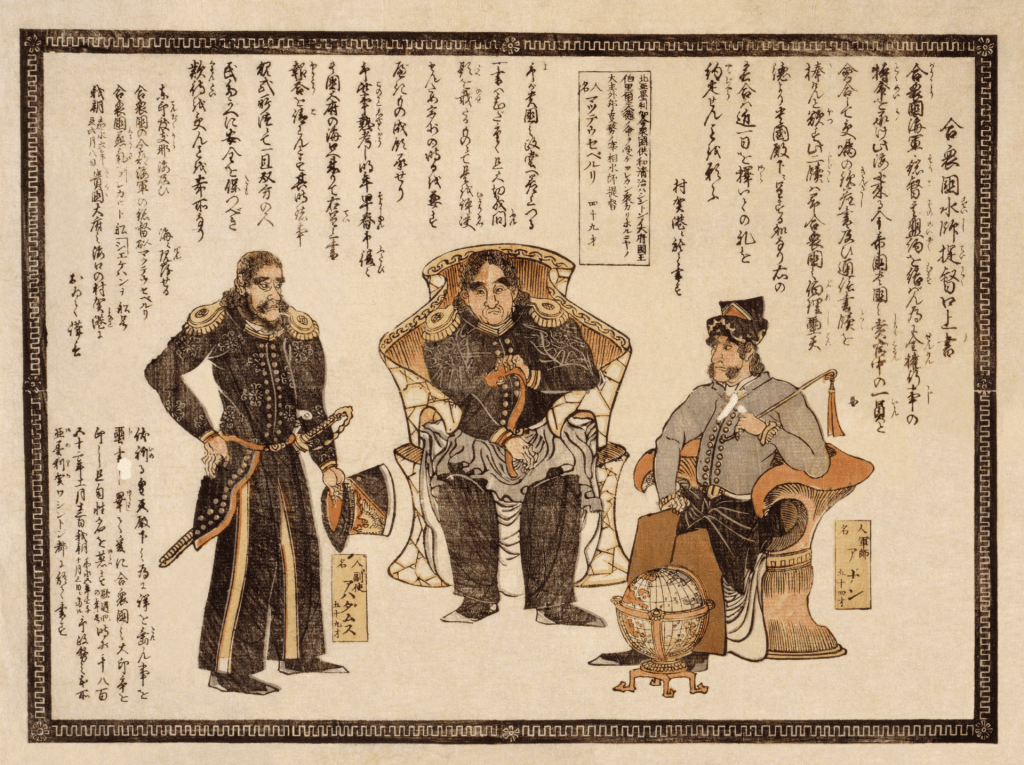
In any event, Matthew Perry didn’t end Japan’s famous “splendid isolation” run. As all things are bound to have a beginning and an end, that too had to end.
As it happens, Japan’s isolation did not lead to its destruction. It opened its Modern History with a bang. And within a century, the country managed to ride several boom-bust cycles that landed it today in the first 10 economies of the world, some 170 years later.
Sometimes it pays not to open your legs to the first newcomer. Modesty and purity are ideals that hold a greater value both for the individual as well as on a macro scale. Rejecting alien notions, saving itself for a better match, allowed Japan to reach a stage that offered more opportunities, and less risk for opening its borders and trade to the Outside world.
Splendid Isolation works every time. But it requires accepting some input and feedback while rejecting others.
We all live in a closed-circuit world and cannot afford to, better said won’t survive hermetically sealed under a rock somewhere. We must interact with one another, but such interactions must be kept at a prudent minimum.
As the saying goes:
Sturdy fences make good neighbours.
And you cannot say fairer than that.
 Götterdämmerung